AI-Controlling, Financial Automation & CFO Dashboards
Discover how AI-based controlling and automation can accelerate reporting, sharpen forecasts, and boost planning security through interactive CFO dashboards.
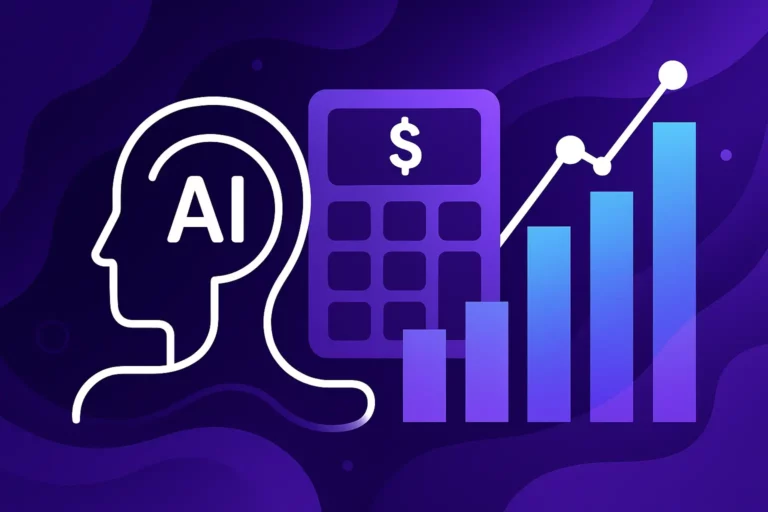
In today’s business landscape, where speed and precision are critical, traditional Excel-based reporting is no longer sufficient. AI-driven controlling automates routine tasks, instantly flags anomalies, and generates accurate financial forecasts before problems arise. With an interactive CFO dashboard, decision-makers maintain real-time control over all key figures.
This article shows you practical ways to optimize your financial processes, reduce risk, and protect liquidity through financial automation.
Why Traditional Controlling Hits Its Limits
- Manual consolidation of multiple Excel sheets delays decisions by days.
- Copy & paste errors and version mismatches lead to costly corrections.
- Without real-time data, controllers react to the past instead of acting proactively.
- High personnel costs (up to 20 hours/week for routine reports), undetected liquidity gaps, and suboptimal budget decisions slow you down.
AI-Based Financial Automation
ETL Pipelines & Data Integration
- Extract accounting, ERP, and CRM data in real time.
- AI-based matching algorithms reconcile account names and currencies.
Anomaly Detection & Alerts
- AI models detect unusual entries and trigger alerts via email or dashboard.
- Machine learning classifies anomalies by urgency and risk category.
Automated Monthly & Quarterly Closings
- AI performs actual-vs-plan reconciliations and flags missing bookings.
- Reduce closing times by up to 70%.
- Visualize key KPIs (Revenue, Cashflow, EBITDA, Working Capital) with drill-down views.
Forecasting & Scenario Planning
Time Series Modeling
- ARIMA, Facebook Prophet, or LSTM networks analyze historical data to model trends and seasonality.
- Hyperparameter optimization via AutoML accelerates model tuning.
Scenario Analysis
- Simulate price changes, marketing spend, or production costs.
- Assess impact on liquidity, break-even points, and profitability.
Dynamic Adjustment
- AI models continuously learn from real-time data. Deviations auto-update forecasts.
- Rule-based alerts warn when thresholds are crossed (e.g. liquidity reserve < 15%).
Case Study: Real ROI for Mid-Sized E-Commerce
Problem:
- 5-day latency in inventory and finance reports
- Inaccurate sales forecasts
Solution:
Implementation of an AI-driven controlling system with CFO dashboard.
Results after 6 months:
- Reporting time reduced from 5 days to 5 minutes
- Forecast accuracy improved from 75% to 92%
- Personnel savings: 1 FTE (~ €40,000/year)
- Working capital: 10% less overstock
- ROI: 3:1 (Project cost: €50,000 → Savings & revenue gain: €150,000)
Implementation: The 5-Step Plan
- Kick-off & Goal Setting
– Workshops with CFO and controlling teams
- Data Mapping & ETL Setup
– Connect ERP/CRM/accounting interfaces
- Modeling & Dashboard Design
– Configure forecasting models and define KPIs
- Pilot & Fine-Tuning
– Test with real-time data, adjust AI parameters
- Roll-out & Training
– Train staff, provide onboarding docs & knowledge base
Conclusion
With AI-powered controlling and financial automation, you take your finance department to the next level: faster, more precise, and future-ready. An interactive CFO dashboard puts your KPIs at your fingertips and helps you spot risks before they escalate.
Contact Think AI Solution Ltd. for your free Proof of Concept and start shaping the future of your financial management—today.